This is an account of my experience of being given a diagnosis of advanced prostate cancer, the lack of mental health support and information about the implications of my diagnosis at the crucial time. When I did eventually get help I experienced the brutal reality of mental health hospital care - diagnosis by psychiatrists based on their unscientific assumptions, massive over-drugging, forced electro convulsive therapy despite my loud objections and distress, and doctors who lied on official forms.
After leaving hospital I requested copies of my medical notes and used them to help me put together this account. This is a case study in how not to deliver news of a terminal illness and the consequences of not providing timely mental health support. Most people would not believe that forced electro convulsive therapy could be inflicted on a cancer patient with no history of mental illness in a British Hospital. They did it to me at the Royal Cornhill Hospital in Aberdeen, and I want to try to make sure that they never do it to anyone else.
Diagnosis
I was 65 and hadn’t been to a doctor for over 35 years. I believed that I was physically and mentally healthy. In August 2021 I made an appointment to see a GP, who took a blood sample. He rang me the next day to say that my PSA level was high and that he would refer me for further tests. These tests stretched out over a period of about a month, with a letter in the post giving the date of each appointment. On the 8th September, before all the tests were complete, I had an appointment with a urologist, who told me that I had inoperable cancer that had spread to my lymph nodes and bones. Although there was a macmillan nurse waiting outside his office, all I remember is that she gave me a card and never contacted me again to offer any support.

I carried on relatively normally and went for more tests. It was 22 September when the urologist wrote a letter setting the diagnosis out in black and white, but I was expected to wait for over 3 weeks before learning about the treatment. I was given no explanation of what having inoperable cancer that had spread throughout my body meant for my future.
Depression
I continued to hold it together mentally and had carried on as normal, although becoming depressed. Suddenly at the beginning of October my mental state crashed into a deeper depression, made worse by worries about money. I had no friends nearby, but some friends at a distance had tried to get help for me. I ended up being taken to A & E at the hospital where I was diagnosed, and after a sleepless night on a trolley all I got was a letter saying that someone from the community mental health team for the over 65s would be in touch, but it might take a few weeks! No connection was made with the cancer diagnosis no one referred me to any cancer support organizations..
My cousin from Shetland and his wife were very worried about me and drove down to England to escort me back to my house in Orkney, where I normally lived. Although my mood was very low, I was able to function normally and to drive myself back and to go out for a meal in Inverness with them.
I did get help from the community mental health team in Orkney, who did their best. But it was mostly practical help rather than any offer of counselling, cancer support, or any information about living with prostate cancer.
On the 16th October 2021 I had an unexpected phone call from an Oncologist in Oban who told me that I had a very serious cancer and that with treatment the average life expectancy is five years. He was trying to make sure that I started hormone therapy, but the effect was to confirm the terminal diagnosis.
On 20th October I began a course of Bicalutamide tablets, prescribed by the local GP., who also prescribed Citalopram antidepressants (which I didn’t take). On 18th November I had the first injection of Triptorelin, a drug that is released gradually over a 3 month period that stops the production of testosterone. Close monitoring of patients who are already depressed is recommended, but this didn’t happen.
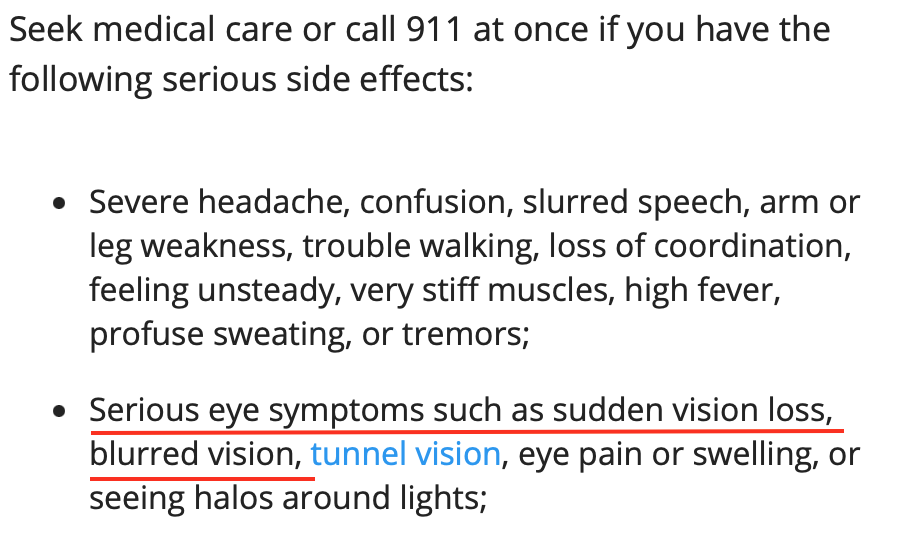
My cousin remained worried about me and invited me to stay with them, which I did. On the evening of 26th November my vision began to blur and for a short time I lost my sight completely. I don’t know the cause, because it was never investigated, but I later found the leaflet for the slow-release Triptorelin injection that I had 8 days before that says ‘Seek medical care… at once if you have the following serious side effects: … Serious eye symptoms such as sudden vision loss, blurred vision…’ I have bilateral glaucoma, which might have been a factor.
I was very frightened because I thought I was having a stroke or similar medical event. I remember going into the living room and asking my cousin to call a doctor or to take me to A & E. He didn’t take me seriously and said that it was too late that evening, which made me agitated. He reluctantly agreed to call the local GP in the morning. The next day he phoned the doctor and drove me to the hospital. I expected him to stay with me while my vision was checked out and then to take me back with him. Instead he abandoned me at the hospital. I now know from my notes that he must have told the GP that I was acting strangely rather than that I was concerned about the loss of vision.
I have now seen my discharge notes and found that they include the complete fiction that I took a shower fully clothed when I became agitated!
